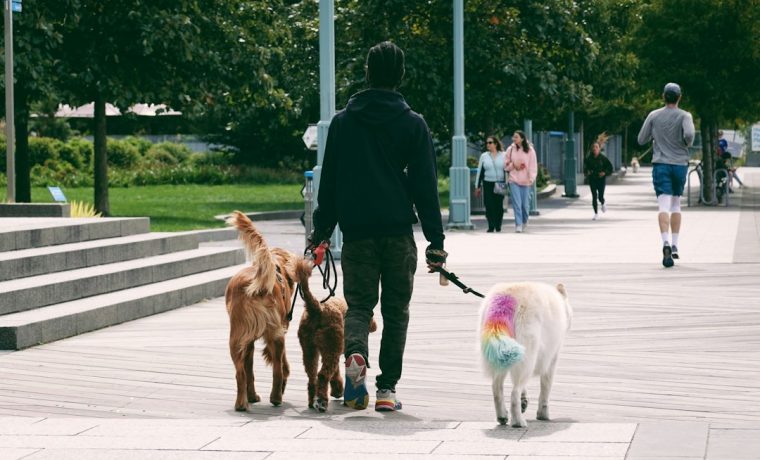

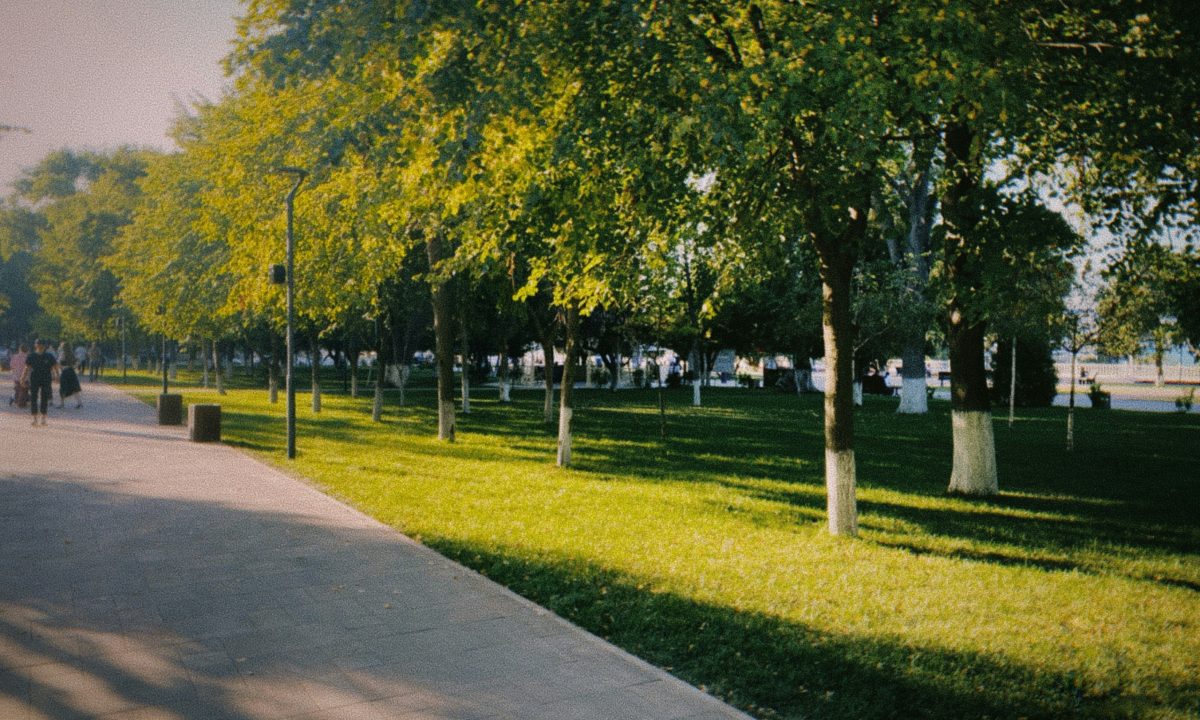
As daylight becomes shorter and the weather turns colder, a familiar dog-walking routine may need a little adjustment. Wet pavements, wind, rain and busy roads can make some routes less comfortable, while darker mornings and evenings change how visible people and dogs are. The answer is not necessarily to abandon outdoor time. It is to plan more flexibly and make each outing suit the dog in front of you.
Choose the route for the conditions
A route that works well on a bright afternoon may feel very different in heavy rain or poor light. Check the forecast and consider the surface underfoot, drainage, visibility and how busy the area is likely to be. A shorter loop with good pavement lighting may be a better choice than a long route beside fast traffic.
Look for alternatives that allow you to turn back easily: a quiet residential street, a maintained park path or a familiar route with sheltered sections. Check local park notices before setting out, as access and lead rules can vary and temporary closures may affect the usual path.
Be visible and stay in control
In low light, help other path users see you. Reflective details on clothing, leads or suitable dog equipment can improve visibility, while a small light may help you keep track of your dog. Make sure any equipment fits comfortably and does not restrict movement. Visibility accessories are not a substitute for keeping a dog safely under control near roads.
Use a secure lead and well-fitted harness or collar appropriate to your dog. On narrow pavements, near crossings or around cyclists, keep enough control to prevent sudden movement into the path of others. Practise a calm pause and a simple change-of-direction cue in quieter settings before relying on them in a busy place.
Look after paws and comfort
After a wet or muddy walk, gently dry your dog and check the paws for grit, small stones, irritation or cuts. If the route includes treated paths, rinse or wipe paws as appropriate and prevent your dog from licking off unknown residues. Contact a vet if you notice persistent soreness, swelling, limping or a wound.
Cold tolerance varies with size, coat, age, health and individual preference. Some dogs are comfortable in chilly weather; others may need shorter outings or a suitable coat. Watch for shivering, lifting paws, slowing down or trying to head home. These signs are reasons to reassess the conditions rather than push on to complete a planned distance.
Make sniffing part of the walk
A useful walk is not measured only in miles. Allowing time to sniff safe areas gives dogs an opportunity to explore information in their environment. Pause where it is safe, keep your dog away from litter and unknown food, and avoid disturbing wildlife. A slower route can be mentally engaging even when it is shorter.
Choose quieter places if your dog finds traffic, crowds or sudden noises difficult. Give other dogs space and ask before allowing greetings. If your dog appears uncomfortable, move away from the trigger or finish the outing. Repeatedly forcing a close encounter is unlikely to make the experience more pleasant.
Replace some outdoor activity with indoor enrichment
When weather or daylight makes a long walk impractical, add a short activity at home. You could scatter part of your dog’s usual food for supervised sniffing, offer a suitable puzzle feeder, practise a few familiar cues or play a gentle search game with a toy. Keep sessions brief and adapt the difficulty to your dog’s age, ability and interest.
Use safe materials and supervise activities that could be chewed or swallowed. Avoid turning enrichment into a demanding workout, particularly for dogs who are tired, unwell or recovering from an injury. If your dog has a medical condition or exercise restriction, follow your veterinary team’s advice about suitable activity.
Keep the routine flexible
Some days may allow a longer walk; others may call for two shorter outings and a little indoor play. There is no single winter schedule that suits every dog. Consider your dog’s normal activity level, age, health and behaviour, then adjust gradually. If you notice a persistent change in stamina, breathing, mobility or willingness to walk, speak with your vet rather than assuming the weather is the only cause.
A calmer approach to colder days
Winter walks can remain rewarding when owners prioritise visibility, secure handling, comfortable surfaces and the dog’s signals. Plan routes that can be shortened, make room for sniffing and use safe indoor enrichment when conditions are poor. A flexible routine is often more useful than sticking rigidly to a distance target.
Reading time: approximately 5 minutes. Image: Magomed / Unsplash.