
Walks are an important part of many dogs’ routines, but physical exercise is only one part of a satisfying day. Dogs also benefit from opportunities to sniff, investigate, solve simple problems, learn and rest. Enrichment does not have to mean expensive equipment or complicated activities. A few thoughtful changes at home can give a dog more choice and mental engagement while fitting around ordinary household life.
Start with the dog, not the gadget
Enrichment should suit the individual animal. Age, health, mobility, confidence, chewing habits and previous experience all affect what is appropriate. A young dog may enjoy a simple search game, while a senior dog may prefer an easy activity that does not require getting up and down repeatedly. If your dog has dietary restrictions, mobility problems or a history of swallowing objects, ask your veterinary team for suitable ideas.
Watch how your dog responds. Interest, relaxed exploration and the ability to disengage are useful signs that an activity is working. If the dog becomes frustrated, worried or overly excited, make it easier or stop. Enrichment is an invitation, not a test.
Make mealtimes more engaging
If your dog eats comfortably and has no medical reason to follow a different feeding routine, you can use part of their normal daily food allowance in a simple search activity. Scatter a small portion over a clean, safe area of floor or place it in a suitable snuffle mat under supervision. Start with an easy version so the dog can understand the task.
Food puzzles can add variety, but choose one that matches your dog’s size and chewing style. Check for loose pieces or damage, clean it regularly and supervise the first few uses. Avoid adding unfamiliar foods simply to make an activity more exciting. Treats and extras should be accounted for in the overall diet.
Try a gentle scent game
Sniffing is a natural behaviour and can make a short indoor session interesting. Begin by letting your dog watch while you place a familiar toy or a few pieces of their usual food in an easy-to-find spot. Give a simple cue, then allow them time to investigate. As they understand the game, you can make the hiding place slightly less obvious while keeping it safe and achievable.
Keep the search area free from household hazards, fragile objects and anything the dog might swallow. Do not hide food near cleaning products, electrical cables or places where the dog could become stuck. Finish while the activity is still enjoyable.
Use short training moments
Training can be a form of enrichment when it is positive, clear and brief. Practise a familiar cue, reward a calm pause or teach a simple target behaviour using rewards your dog enjoys. A few minutes may be enough. End on an easy success rather than repeating a difficult exercise until the dog loses interest.
Reward-based learning helps make the activity predictable and cooperative. Avoid punishment, intimidation or forcing a dog into a position. If you are working on a challenging behaviour, a qualified reward-based trainer or veterinary behaviour professional can help you choose a suitable plan.
Offer choice and safe exploration
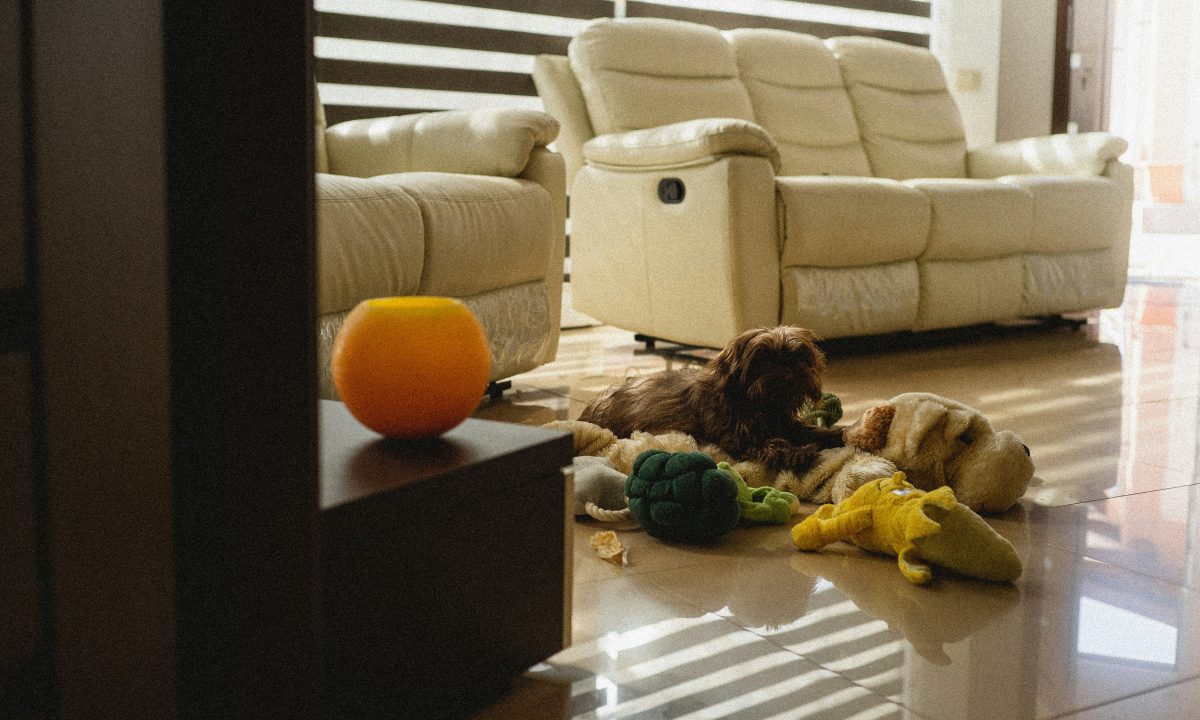
Rotate a small selection of appropriate toys rather than leaving every item out all the time. Offer different textures and shapes only if they are safe for your dog’s chewing style, and remove anything damaged. Some dogs enjoy a cardboard-box exploration game, but only use clean, plain materials without staples, tape, plastic or small pieces that could be swallowed. Supervise throughout.
Choice can be simple: offer two safe toys and see which one your dog selects, or allow them to choose a comfortable resting place. Not every dog wants constant interaction. Having the option to settle undisturbed is part of good welfare too.
Protect rest as part of wellbeing
Enrichment should sit alongside adequate sleep and quiet time. Provide a comfortable place where your dog can retreat without being disturbed. Avoid waking them repeatedly for play or filming. If a household is busy, teach family members—especially children—to respect the dog’s resting space and leave them alone when they are sleeping.
Build a realistic weekly rhythm
You might try one sniffing activity on a rainy afternoon, a short training session on another day and a food puzzle at a normal meal. Keep walks and social experiences suited to the dog’s needs, and let rest periods remain part of the routine. There is no need to fill every spare moment with stimulation.
Notice what your dog enjoys and what seems tiring or frustrating. If behaviour, appetite, mobility or energy changes persist, seek veterinary advice; enrichment is not a substitute for investigating a health concern.
Small activities, individual benefits
The best enrichment is safe, achievable and enjoyable for the dog taking part. Start simply, supervise thoughtfully and adapt as your dog’s needs change. A little sniffing, a familiar game or a calm training moment can make an ordinary day more interesting without making life more complicated.
Reading time: approximately 5 minutes. Image: BĀBI / Unsplash.