
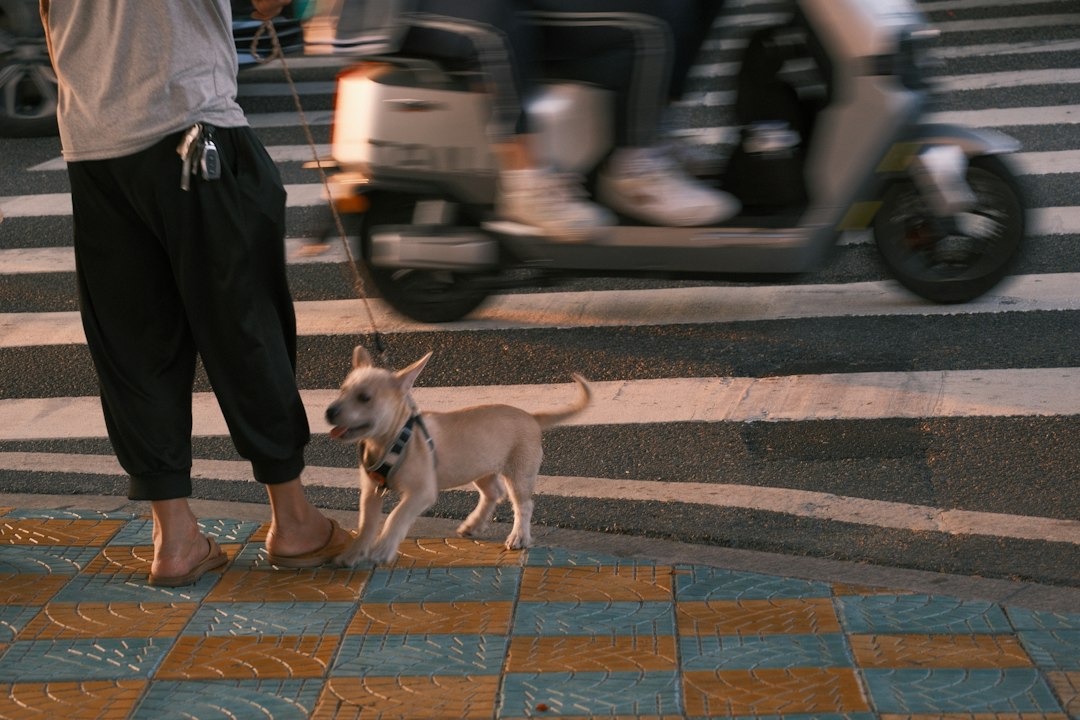
By late autumn, an ordinary dog walk can begin or end in darkness. Familiar pavements look different under streetlights, parked cars can hide a dog’s outline and wet roads create glare. For city dogs, the challenge is not simply that it is colder; it is that people, cyclists and drivers may have less time to notice one another.
A safer winter route does not need to be complicated. A few deliberate choices about visibility, timing, crossings and space can make daily outings more predictable while still giving dogs time to sniff and explore.
Make the pair easier to see
Choose reflective details on both the dog’s walking equipment and the handler’s outer layer. A reflective lead, harness panel or coat can help when vehicle lights fall across it. LED accessories may add visibility, but check that they are secure, weather-resistant and comfortable for the dog. Avoid anything that dangles, catches or interferes with movement.
The RSPCA’s winter advice recommends sticking to well-lit places and using reflective or LED gear so dogs and owners can be seen by traffic. Treat lighting as an extra layer, not a substitute for careful positioning: drivers still need time and distance to react, and a small light can be obscured by a coat, bag or passing vehicle.
Choose routes for sightlines, not just distance
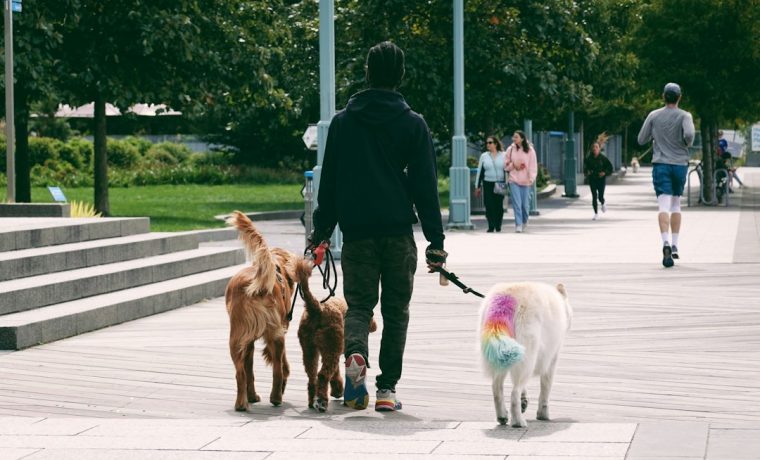
A slightly longer route with broad pavements, good lighting and fewer blind corners may be a better choice than the shortest cut through a narrow alley or a busy car park. Where possible, use crossings with clear visibility and wait until traffic has stopped before stepping out. Keep your dog on the side furthest from moving traffic and shorten the lead near junctions, cycle lanes and crowded entrances.
Wet leaves, standing water, ice and uneven paving can make a familiar path more difficult. Slow down on slippery surfaces and avoid asking a dog to hurry across a section where footing is uncertain. If a route is poorly lit or temporarily obstructed, choose another rather than relying on a phone torch while managing the lead.
Give dogs room to process busy streets
Urban walks bring close encounters with other dogs, prams, delivery bikes and sudden noise. Cross the road or step aside early when space is tight. Ask before allowing dogs to greet, and do not assume that a dog approaching on a lead wants to interact. A dog that turns away, pauses, licks its lips or tries to create distance may be asking for more room.
Build in quiet sniffing stops away from entrances and cycle routes. These pauses provide enrichment without forcing the dog to stand in a stream of people. If your dog finds evening traffic stressful, use a quieter time or a calmer street for the main walk and meet exercise needs with suitable activities at home.
Check local rules and seasonal hazards
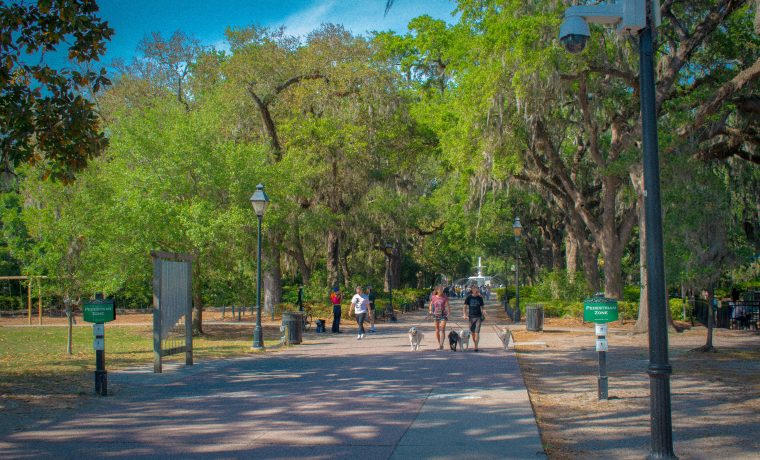
Some parks and public areas have local restrictions. In England and Wales, a Public Spaces Protection Order may require dogs to be on leads, exclude them from certain areas or set other conditions. Councils must make local restrictions known, so read signs at entrances and check the council website if you are unsure. Rules differ across the UK and from one place to another.
Winter also brings grit, rock salt, antifreeze and hidden hazards around roads and car parks. Do not let dogs investigate spills or eat unknown material. After a walk, wipe paws and the lower belly to remove grit and salt. Keep dogs away from frozen ponds and lakes; ice can break without warning.
A simple before-you-leave routine
- Check the forecast, surface conditions and whether the route is adequately lit.
- Make sure collar or harness fit is secure and reflective details are visible.
- Carry a torch, bags and a lead that gives you control near traffic.
- Choose a route with clear pavements and safe places to pause or cross.
- Wipe paws and check for debris when you get home.
The best winter walk is not necessarily the longest or most adventurous. It is one where the dog can move comfortably, the handler can see and be seen, and everyone has enough room to respond calmly. A little route planning can preserve the pleasures of a city walk even when daylight is in short supply.
Sources: RSPCA winter dog safety; GOV.UK guidance on Public Spaces Protection Orders.