
A park can be important to dog owners without belonging only to them. The same path may be used by a parent with a buggy, a runner, a wheelchair user, a birdwatcher and someone who simply wants a quiet bench. The strongest local spaces recognise those different needs instead of treating every disagreement as a choice between dogs and everyone else.
Making a neighbourhood more dog-friendly is therefore less about adding a single dog sign or installing one new bin. It is about understanding how people use a place, explaining the rules clearly and making everyday considerate behaviour easier.
Start by finding out what happens on the ground
Residents often know where problems occur: a narrow entrance where leads tangle, a muddy path that becomes difficult to use, a corner where waste bins overflow or a field where livestock sometimes graze. Councils and park managers can gather useful feedback through short surveys, local walks, community meetings and conversations with dog-walking groups.
Ask more than dog owners. Parents, older residents, disabled visitors, people who are nervous around dogs and local wildlife groups may notice barriers that other users miss. A practical improvement plan should identify where people need more space, where signs are confusing and which routes need better maintenance.
Make local rules easy to understand
Dog access rules can vary between parks and even between different parts of the same site. In England and Wales, some public areas are covered by Public Spaces Protection Orders (PSPOs). These may require dogs to be on leads, restrict access to particular places, limit the number of dogs walked by one person or require owners to carry bags and clean up. The exact conditions depend on the local order.
Before changing a routine, read the signs at park entrances and check the council’s website for maps and current restrictions. Do not assume that a rule in one town applies in another. The GOV.UK PSPO guidance explains the kinds of controls councils can put in place and why local information matters.
Design for considerate use
Small details can reduce friction. Clear signs at entrances help visitors understand where dogs are welcome and when leads are required. Well-placed bins make it easier to dispose of waste responsibly. A maintained path can provide an accessible route around muddy ground, while seating set away from narrow bottlenecks gives people room to stop without blocking others.
Where a park has sensitive wildlife areas, nesting sites or livestock nearby, signs should explain the reason for restrictions as well as the rule itself. People are more likely to cooperate when they understand what a boundary protects. The Countryside Code asks visitors to keep dogs under effective control and in sight, respect wildlife and livestock, stay on appropriate paths and clear up after their dogs.
Read the Countryside Code before visiting rural paths and open spaces. Some seasonal and land-specific lead requirements apply, so local signs remain important.
Help owners and neighbours share space
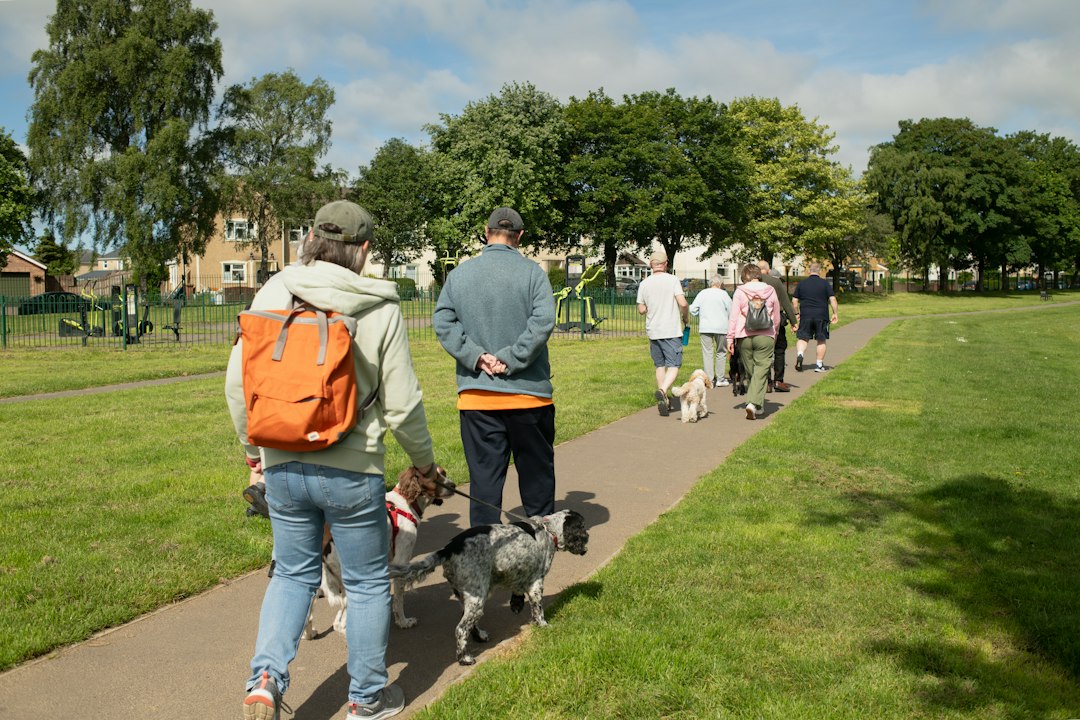
Friendly reminders work best when they are specific and respectful. A notice asking people to keep dogs close near a play area is more useful than a vague warning about irresponsible owners. Walking groups can model good habits by keeping entrances clear, asking before greetings and giving nervous dogs room. They can also help new residents learn which paths are suitable for off-lead exercise and which are not.
Dog owners have a role too. Pick up waste every time, carry a spare bag, prevent chasing of wildlife and bring a dog back to lead when requested or when the situation calls for it. If another visitor is uncomfortable, create distance rather than insisting that a friendly dog should be welcomed.
Turn feedback into visible improvements
Local groups can keep a simple record of recurring issues and share them with park managers: a damaged gate, a missing sign, poor lighting or a bin that fills too quickly. Photos and precise locations help councils understand what needs attention. Where a rule seems unclear, ask for an explanation before circulating assumptions on social media.
Progress can be modest but meaningful: a repaired path, a better sign, a clearer map or a volunteer-led welcome walk. The goal is not to make every space suitable for every activity. It is to help people understand where they can go, what is expected and how to share the place with care.
A dog-friendly neighbourhood is one where dogs can enjoy appropriate exercise and enrichment while other visitors feel safe and respected. Listening to the whole community makes that balance more achievable — and gives local pride something practical to grow around.